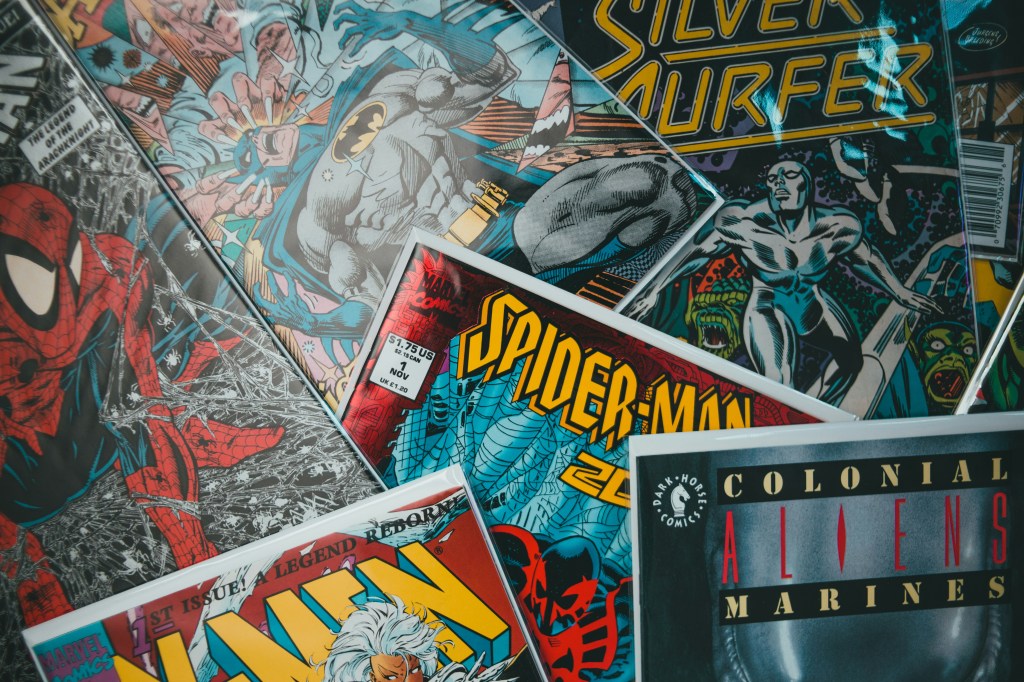
What is a Comic?
A comic is a medium that uses a combination of visual and textual elements, such as panels and speech bubbles, to tell a story. It can be about any genre, ranging from superhero adventures to horror fiction, making it much more diverse than the common perception of it being solely about superheroes.
A comic can be simply thought of as a low-frame animation with captions and speech bubbles in place of the corresponding visual and audio elements. Every panel represents a specific scene of the story, and the reader controls the reading speed by deciding when to switch from one panel to another.
Why should YOU try making a comic
If an artist is not confident in their writing ability but has ideas that they would like to get out, comics allow them to use images to tell a story, with as much or as little text as they please. The same goes for anyone who is very good at writing, but not as good when it comes to drawing. Drawing is a skill that can be improved, and if it really is a problem for the writer, artists are cheaper than ever to hire, especially online.Anyone can make a comic nowadays, with almost anything they have on hand.Comics can be made digitally, using drawing programs, or the artist can use good old pencil and paper.
Getting Started
When you begin learning how to make your first comic, you may think that you have to plan everything before you can start. Although planning can be extremely useful, however, it is often most helpful to just know the general concept of the idea for the comic that you are going to make and begin.
In this blog, I would like to walk you through the entire process of making a comic. We will start with the basic story idea for a comic, and work our way through, adding characters, dialogue, page formatting, panel formatting, and finally, the comic art itself. In this blog, we will go over these topics and more, and tell you about the importance of the comic, and what it can do for you.

“If you have an idea that you genuinely think is good, don’t let some idiot talk you out of it.” — Stan Lee
Start by listing the ideas that spark your interest. Stories and comics go hand in hand, so the story that you tell should be something that interests you rather than something that you think other people will like. You can usually find more passion in the project if you write for yourself first before thinking of others.
It is important to not stress about your ideas being popular, though. If you enjoy a genre of story, there is a good chance that others can enjoy it as well. Some readers even find that they unexpectedly enjoy a genre they didn’t think they would because you’ve given them a new view on it. Your comic could be the one to change someones mind about a certain genre.
The point is to create something that interests you. If you feel interest in what you’re doing, that emotion can transfer into your story, writing style, characters, and illustrations. Your comic doesn’t have to be something everyone likes– it just needs to be something that people can have an understanding of and can enjoy.
Genre Description
- Superhero – stories featuring human heroes or anti-heroes, battle between good and evil, and supernatural powers.
- Fantasy – stories set in fictional worlds, that include elements of magic and mythical creatures.
- Science Fiction – stories set in the future world, involving space, technology, alien life, and robots.
- Horror – comics intended to scare or terrify the reader, usually containing supernatural elements.
- Mystery – stories centered around solving a crime or a puzzle.
- Romance – stories centered around the love interest and interpersonal relationships.
- Comedy – aimed to create a humorous effect, provoke laughter, depict amusing situations, foolish behavior of the characters.
- Drama – serious stories focusing on the interpersonal conflicts, drama, and human condition.
- Adventure – stories where the characters explore the environment, face various obstacles, and pursue some goal.
- Slice of Life – slice of life stories focus on day-to-day life, school, and workplace romances, depicting ordinary, slice of life events in an interesting way.
How to Write a Good Character
One should be able to create a character that is engaging and has a personality, ambitions, strengths, and flaws just like a real person. The characters do not have to be likable or perfect; they only need to be interesting to the audience.
First of all, it is critical to provide a goal for the character. The target can be something simple, like wanting to save the world, or an ordinary objective, such as demonstrating something or getting a friend. The purpose will define the character’s actions and motivations.
Next, one should think about what strengths and weaknesses the character should have. There must be a reason for the character’s successes and failures. If a person does not have any flaws, it might become boring and plain. A character’s strong sides should also be defined since they set them apart from others.
The personality and behavior of the characters should be defined as well. It is essential to create a certain manner in which a person acts, for instance, how they talk, behave when they are mad or embarrassed, etc. As for the behavior in a comic, it can be shown through their appearance, i.e., what they wear, their facial and eye expressions, and their body language.
The background of the characters is also of great importance. One does not have to describe it fully but should have a certain understanding of the person’s history. It will explain their ambitions, fears, motivations, and their impact on others.
Finally, the characters should change and develop throughout the story. It can be a sudden change or a steady process. For example, people can become stronger, calmer, and more self-assured. They can also face some disappointments and failures but then learn from them and move forward. Such a transformation is called a character arc.
Moreover, when creating a character for a comic, it is worth remembering that they do not only speak but also act. Therefore, it is needed to define how they will look and how their appearance will show their emotions and character traits. A good character should be recognizable without dialogue.


Leave a comment